Two Roads, One Destination
Kotor sits on the opposite side of the Vrmac mountain from Tivat. The mountain creates a natural wall between the two towns, and there are exactly two ways around it: through the tunnel drilled straight through the rock, or along the bay road that hugs the waterfront around the mountain's base. Locals use both routes regularly, choosing based on time pressure, weather, and mood. Neither is definitively better, they serve different purposes.
The tunnel gets you there in twelve minutes flat. The bay road takes twenty minutes but passes through fishing villages, offers three pull-off viewpoints, and follows the water the entire way. If you are staying in Tivat for a week, drive the tunnel on day one when you are tired from travelling, and save the bay road for a morning when you have time to stop and take photographs.
The Vrmac Tunnel Route
Exit TIV and turn left onto the main road. After three kilometres, the Vrmac tunnel entrance appears on your left. The tunnel is 1.4 kilometres long, well-lit, and has two lanes with a 60 km/h speed limit. Headlights are mandatory inside, most rental cars switch them on automatically. You emerge on the Kotor side at a roundabout above the bay, with the old town walls visible below. Follow the signs down to the waterfront.
This is the route every rental company recommends because it is fast, direct, and impossible to get lost on. The road is in excellent condition, the tunnel has no toll, and there is minimal traffic except during peak summer afternoons when everyone returns from Kotor simultaneously. If you are arriving at TIV after a long flight and just want to reach your accommodation quickly, the tunnel is the obvious choice.
The Scenic Bay Road
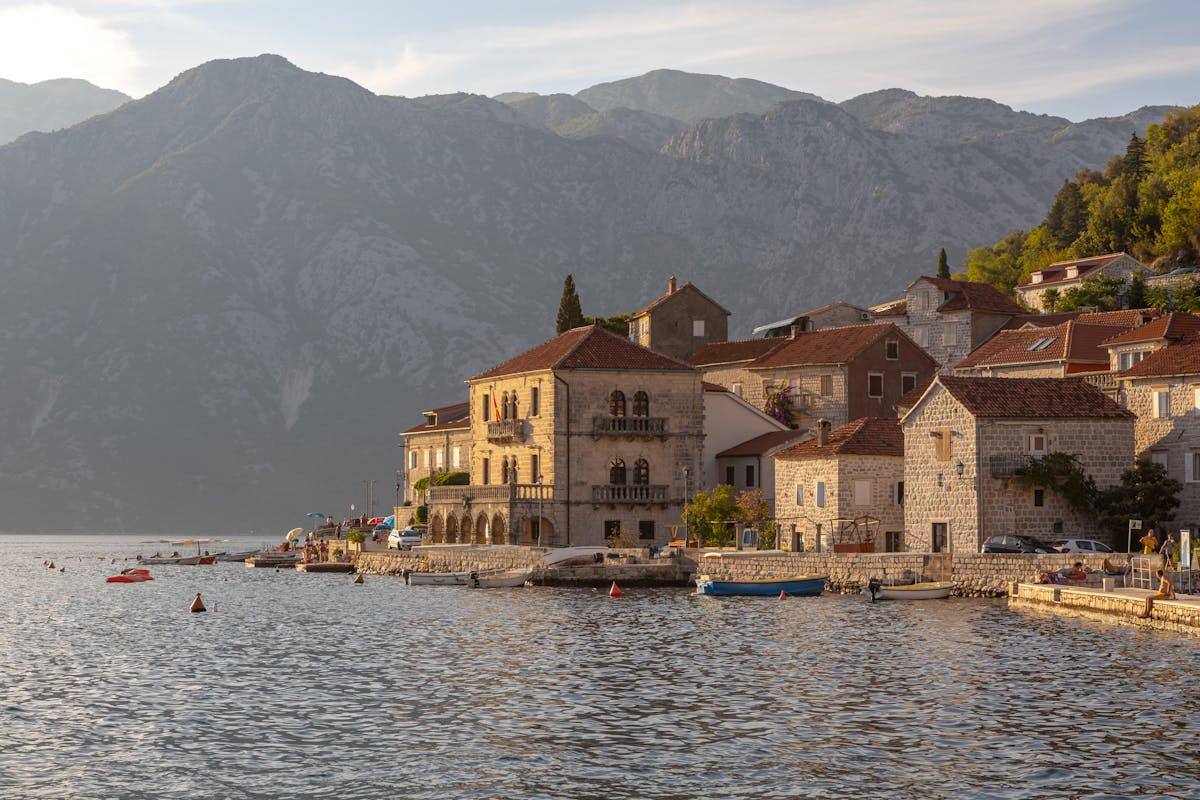
The bay road starts from the same airport exit but instead of entering the tunnel, you continue straight along the waterfront. The road passes through Muo, a fishing village where colourful wooden boats are pulled up onto the quay, then through Prcanj, where the Captain's Houses line the waterfront. These ornate stone mansions were built by wealthy ship captains during the Venetian period, and several have been beautifully restored.
Between Prcanj and Kotor, the road narrows to a single lane in places and follows the bay so closely that spray reaches the car during winter storms. There are three informal pull-off viewpoints where you can stop, photograph the bay, and watch the ferry crossing the narrows in the distance. The final approach into Kotor is along the base of the city walls, with the fortress climbing the mountainside above you. It is a more dramatic arrival than the tunnel exit.
Where to Stop on the Bay Road
Three spots along the bay road merit a pause:
- Muo fishing quay: Park on the roadside and walk along the stone quay. Fishermen sell fresh catch in the morning. A small cafe serves espresso with a view straight across the bay to Perast.
- Prcanj Captain's Houses: The largest unfinished church on the Adriatic coast sits here, the Birth of the Virgin Mary cathedral, started in the 18th century and never completed. The facade is impressive from the road.
- Bay viewpoint (km 7): An unsigned gravel pullover on the right side of the road with space for three cars. The view takes in the entire inner bay: Perast, both islands, and the mountain ring.
Parking in Kotor
Both routes end at the same roundabout below Kotor's walls. The Tabacina multi-storey car park is 100 metres from this roundabout, paid, covered, and the closest option to the Old Town's Sea Gate. It fills by 10 am in summer, so arrive early. The River Gate lot along the Skurda stream is cheaper and sometimes has spaces when Tabacina is full. In July and August, an overflow lot operates on the approach road with a shuttle. For family-friendly stops in Kotor, see our family day trips guide.
The Return: Why Take the Other Route
Here is the local move: drive to Kotor through the tunnel in the morning to save time, then return via the bay road in the late afternoon when the light on the water is golden. The bay road faces west on the return journey, which means the setting sun illuminates the mountains, the water turns copper, and the whole bay looks like a painting. It adds eight minutes to your return but transforms a transit drive into the scenic highlight of your day. Montenegrins call this stretch of the bay road one of the most beautiful coastal drives in Europe, and for once, the marketing is not exaggerating.